Does Hail Damage Require Roof Repair or Full Roof Replacement in DFW?

Hail damage does not always require a full roof replacement. In DFW, localized damage affecting a limited number of shingles may be repairable, while widespread impacts, fractured or compromised shingles, leaks, and damage across multiple roof slopes can make replacement the better option. The right choice depends on the extent of the damage, roof age, roofing material, overall condition, and whether repairs can restore reliable protection.

DFW Roofing Pro helps North Texas homeowners understand that difference before moving forward with storm damage work. Our team evaluates the roof as a complete system, looking beyond obvious dents or missing shingles to determine whether hail has affected its ability to protect the home. We know that homeowners want a clear explanation of what happened, what needs attention, and why a particular solution makes sense. That customer-first approach is especially valuable in Dallas-Fort Worth, where severe thunderstorms and large hail are a recurring concern. The National Weather Service notes that severe weather frequency in the Metroplex peaks during spring and that large hail, damaging winds, flooding, and tornadoes occur in the region nearly every year.

hail damage

Hail Damage Repair vs. Roof Replacement: How Do You Know Which You Need?

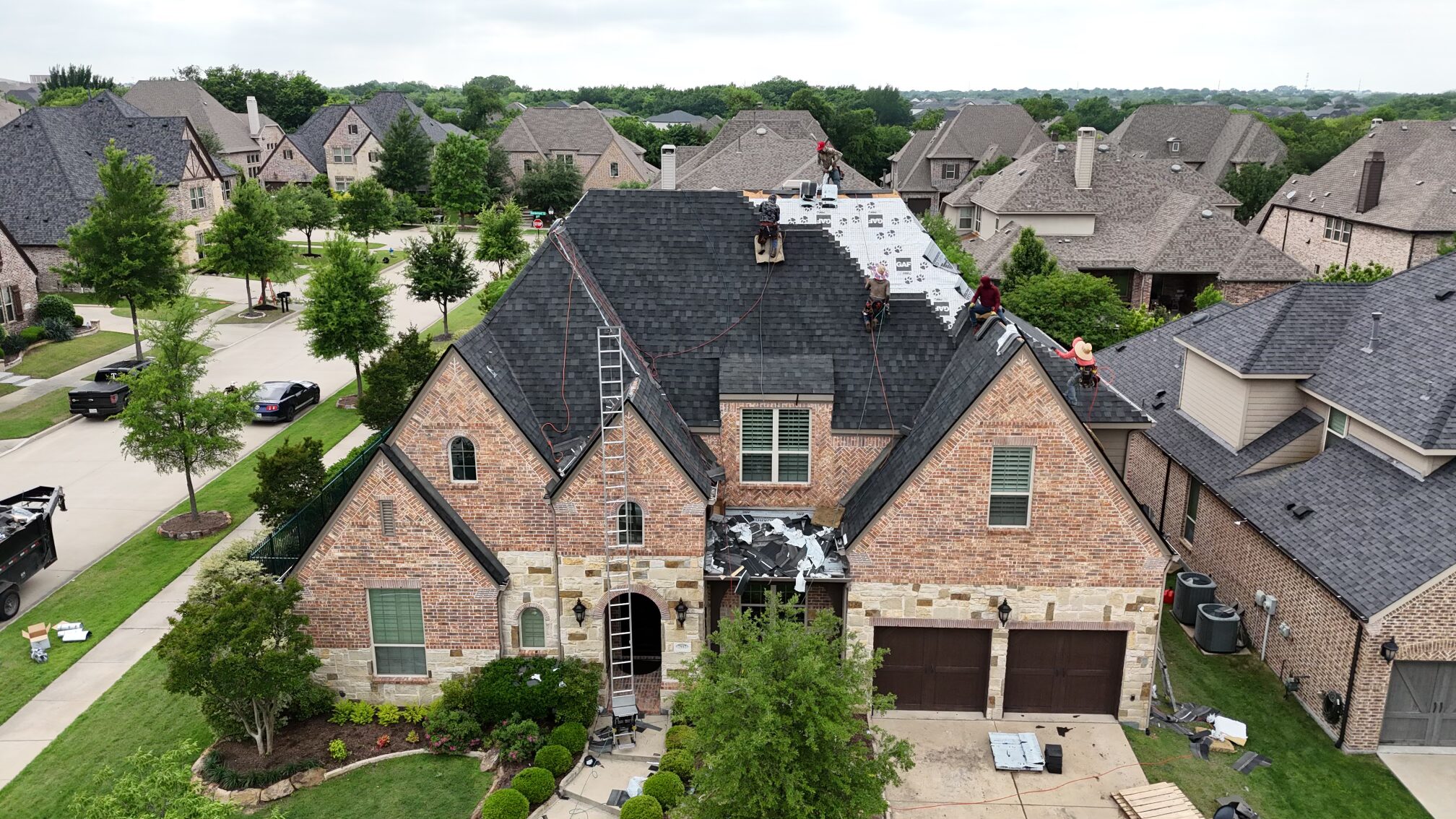
The main difference between hail damage repair and roof replacement is how much of the roofing system has been compromised. A repair addresses isolated, limited damage while preserving the rest of a roof that remains serviceable. Replacement removes the existing roofing material and installs a new roofing system when damage is widespread or the existing roof can no longer provide dependable protection.

A professional roof inspection is important because hail damage is not always obvious from the ground. According to the Insurance Institute for Business & Home Safety (IBHS), hail can dent or tear asphalt shingles and displace their protective granules. Severe hail damage can also create the potential for water intrusion.

When Can Hail Damage Be Repaired?

Hail damage may be repairable when it is limited to a relatively small area and the surrounding roof remains in good condition.

For example, repairs may make sense when:

  • Damage is confined to a limited number of shingles or a small roof section.
  • Most of the roofing material remains functional and secure.
  • The roof is otherwise in good condition.
  • Replacement shingles can be installed properly without disturbing surrounding materials.
  • Flashing, decking, underlayment, and other important components have not sustained extensive damage.
  • There is no evidence of widespread water intrusion.

Repairing isolated hail damage can restore protection without replacing roofing material that still has useful service life. However, the visible impact point is only part of the evaluation. A qualified roofer should inspect surrounding shingles and roof components to determine whether the problem is truly localized.

When Does Hail Damage Require a Full Roof Replacement?

Roof replacement becomes more appropriate when hail damage is widespread enough that individual repairs cannot reasonably restore the roof as a complete protective system.

Replacement may be recommended when an inspection finds:

  • Hail impacts throughout multiple roof slopes.
  • Widespread shingle fractures, tears, or granule displacement.
  • Numerous damaged or missing shingles.
  • Storm damage combined with significant existing deterioration.
  • Water intrusion or damage to underlying roofing components.
  • A roof condition that makes reliable individual repairs difficult.

Roof age matters, but age alone does not prove that storm damage requires replacement. The Texas Department of Insurance (TDI) specifically notes that insurance does not pay for a new roof simply because the existing roof is old or worn.

The decision should instead be based on the roof’s actual condition, the storm-related damage, and whether a repair can provide a dependable result.

Does the Size of the Hail Determine Whether a Roof Needs Replacement?

Hail size matters, but hailstone size alone cannot determine whether a roof needs repair or replacement.

The amount of damage depends on several variables, including the hailstone’s mass, diameter, velocity, strength, and impact characteristics, as well as the type and condition of the roofing material. IBHS research shows that asphalt shingles can experience denting, tearing, and granule displacement when struck by hail, with severity varying by roofing product and hail size.

That is why two neighboring DFW homes can come through the same storm with different roofing needs. Roof age, material, slope, previous condition, and the exact hail impacts can all affect the outcome.

For homeowners, the practical takeaway is simple: do not assume that large hail automatically means you need a new roof, and do not assume a roof is fine simply because you cannot see damage from the ground.

What Should DFW Homeowners Do After a Hailstorm?

After a significant DFW hailstorm, start by documenting visible damage and arranging a professional roof inspection rather than attempting to diagnose the roof yourself.

TDI recommends taking photos or videos of storm damage, preventing additional damage when necessary, saving receipts for temporary repairs, and contacting your insurance company promptly if you intend to make a claim.

A practical post-storm process includes:

  1. Check the property from the ground. Look for fallen shingles, damaged gutters, dents, broken materials, or signs of water intrusion.
  2. Document what you can safely see. Photos can help establish the property’s condition following the storm.
  3. Schedule a professional roof inspection. A trained roofer can examine shingles, flashing, vents, penetrations, and other components more closely.
  4. Review the findings. Ask whether damage is isolated enough for repair or widespread enough to justify replacement.
  5. Review your insurance policy separately. Coverage, deductibles, depreciation, and claim decisions are determined by your policy and insurer.

This distinction is important in Texas. TDI states that some policies provide replacement cost coverage while others provide actual cash value coverage, which accounts for depreciation. TDI also notes that an insurer might not pay for the entire roof when only part of it is damaged.

Frequently Asked Questions About Hail-Damaged Roofs in DFW

Can you replace only a few hail-damaged shingles?

Yes, individual shingles or a limited roof section can sometimes be repaired when the damage is localized and the surrounding roof is still in suitable condition. A professional inspection is needed to determine whether a localized repair will provide a reliable result.

How soon should I have my roof inspected after hail?

Have the roof evaluated promptly after a significant hailstorm, particularly if you notice missing shingles, leaks, damaged gutters, or other storm damage. TDI recommends filing a claim as soon as possible when hail or strong winds have damaged your property.

Will homeowners insurance pay for a full roof replacement after hail?

It depends on your policy and the extent of covered damage. TDI explains that policies may provide replacement cost or actual cash value coverage, and an insurer may not replace an entire roof when only part of it is damaged.

Is it legal for a roofer to waive my insurance deductible in Texas?

No. The Texas Department of Insurance states that contractors cannot legally waive, rebate, or absorb a homeowner’s property insurance deductible.

Make the Right Choice for Your DFW Roof After Hail

When hail hits Dallas-Fort Worth, the goal should not automatically be to repair the roof or automatically replace it. The goal is to determine how much damage occurred and which solution will restore dependable protection to your home.

That starts with a thorough inspection and a straightforward explanation of the findings. DFW Roofing Pro can assess storm damage, identify affected roofing components, and help you understand whether targeted hail damage repair or a complete roof replacement is appropriate for your home’s condition. Contact DFW Roofing Pro today to schedule an inspection and get clear answers about your next step.

Similar Posts